
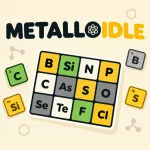
Metalloidle







About Metalloidle
Metalloidle turns chemical symbols into a deduction puzzle where periodic table knowledge and color clues reveal the hidden sequence.
Metalloidle gives the familiar word-guessing format a chemistry-based identity. Hidden answers use symbols from nonmetals and metalloids, turning the periodic table into the game's main pool of possibilities. The interesting part comes from the difference between knowing an element and knowing how its symbol fits the puzzle. Familiar chemistry can point toward possible answers, but position clues still determine which choices actually work.
SYMBOLS CHANGE THE WAY YOU THINK
Metalloidle makes chemical symbols the important units, so the way players read the board feels different. B represents Boron, while Si represents Silicon. Both are valid chemical symbols, yet their different lengths and identities create different possibilities within the hidden sequence.
That distinction creates several things to watch:
- Symbol recognition: Element names need to connect with their correct symbols.
- Position: Correct symbols still need to occupy the right places.
- Category: Possible answers come from the nonmetal and metalloid groups used by the game.
- Elimination: Incorrect symbols gradually disappear from consideration.
- Feedback: Color clues reveal which ideas deserve another look.
Gray Clues Can Do Heavy Lifting
Gray feedback deserves more attention than it usually receives in word games. One excluded symbol can remove an entire possibility from later guesses, especially when the pool of eligible elements is already limited. The same idea applies to incorrect positions. A yellow symbol still provides useful information because its presence is confirmed, even though its current location is wrong.
SIMILAR GAMES

Categories And Tags of Metalloidle
Metalloidle turns chemical symbols into a deduction puzzle where periodic table knowledge and color clues reveal the hidden sequence.